Mutant gang rule of Gotham
Batman the Dark Knight Returns 10th Anniversary Edition HardcoverMutant gang rule of Gotham describes the period when the Mutants dominate Gotham City through intimidation, collective violence, and the visible failure of established authority. The gang’s power is not merely criminal control of streets; it becomes a competing sovereignty, one that makes the city’s residents experience ordinary law as absent and immediate physical force as the only reliable rule. The resulting crisis creates the conditions for Bruce Wayne / Batman’s return and later allows his methods to be judged against both institutional government and the movements that arise in the Mutants’ wake.
Conditions of the Gang’s Rise
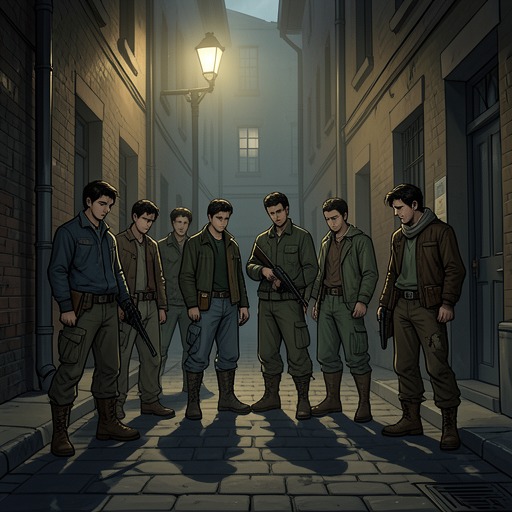
The Mutants emerge within Gotham City’s wider social decay, where violence has become familiar and the authorities appear increasingly unable to protect the public. Their strength depends on numbers, youth, mobility, and the fear produced by their reputation. They do not require a formal legal structure to rule: the threat of attack, the visibility of their gatherings, and the expectation that resistance will be punished are enough to make their presence politically meaningful.
The gang’s control also exposes a crisis of labeling and public perception. The Mutants are treated as a recognizable threat rather than as isolated offenders, and that identity intensifies both public panic and official pressure. At the same time, the label gives the gang a collective identity through which individual violence becomes a shared movement. Gotham City therefore confronts not only criminal acts but a named social force that seems to embody everything the city believes has gone wrong.
A Rival Authority in Gotham City
The Mutants’ rule is sustained by coercion rather than law, tradition, or accountable administration. Their authority is immediate and territorial: control belongs to whoever can occupy public space and compel obedience. This makes their regime an example of political power in an emergency, when normal institutions have lost practical force and the distinction between policing and warfare begins to collapse.
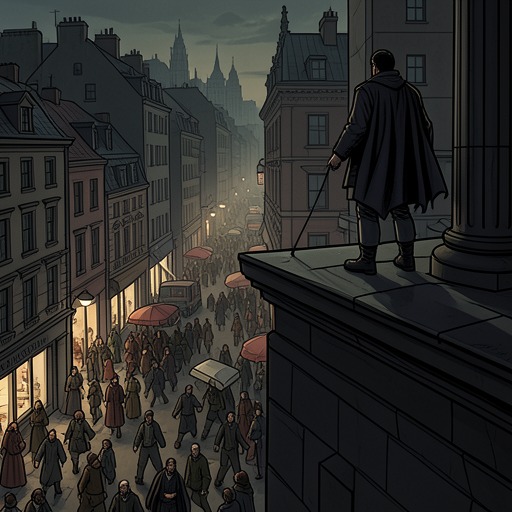
The gang’s dominance places Gotham City’s residents in an exposed condition. They remain subject to violence while receiving little effective protection from the institutions that are supposed to govern them. Public space becomes the arena in which authority is tested, and the city’s population is pressed toward passivity, fear, or collaboration. The Mutants’ success thus measures the distance between formal government and lived government: the city may still possess offices and procedures, but the streets answer to the gang.
Batman’s Challenge to Mutant Rule
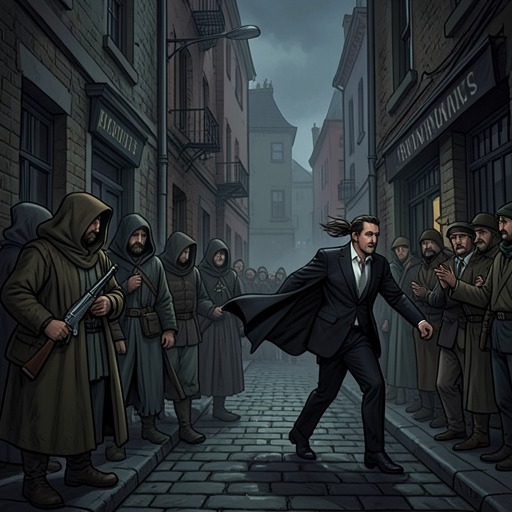
Bruce Wayne / Batman’s return directly contests the assumption that the Mutants are unbeatable. His intervention is not a routine police action. It is a confrontation between the gang’s collective force and a highly organized personal symbol whose authority comes from fear, memory, and the ability to act where official power has failed. By entering the gang’s sphere rather than waiting for institutions to recover, Batman turns the struggle into a public demonstration that the Mutants’ control can be broken.
The conflict also changes the meaning of the gang’s reputation. The Mutants depend on appearing larger and more inevitable than any individual opponent, but Batman refuses to accept that scale as destiny. Their rule is shown to be formidable yet vulnerable: once its symbolic invincibility is damaged, coercion no longer guarantees obedience. The challenge therefore has a psychological and political consequence beyond the immediate violence, because it reopens the possibility that Gotham City can be organized against the gang.
Collapse, Succession, and Aftermath
The end of Mutant dominance does not restore Gotham City automatically to stable constitutional order. The collapse of one violent authority leaves a vacuum, and that vacuum becomes part of the continuing struggle over who may direct the city. Later developments involving the Sons of Batman show how resistance to the Mutants can harden into another movement capable of imposing its own order. The transition is therefore not a clean passage from lawlessness to legality; it is a succession of emergency powers.
This aftermath complicates any simple opposition between the Mutants and Batman. The gang’s defeat removes an immediate threat, but the methods and symbols of force remain available to those who claim to be protecting Gotham City. Batman’s organization of citizens and allies to restore order presents collective action as an alternative to passive dependence on failed institutions, yet it also raises the question of how a new order acquires legitimacy when it begins outside ordinary authorization.
Narrative Significance
Mutant gang rule of Gotham gives concrete form to the book’s central anxiety about a society that has allowed violence to become its governing language. The gang is both a product of Gotham City’s decay and an accelerator of it: its existence confirms public fears, its visibility amplifies those fears, and the resulting panic encourages still harsher and less accountable responses.
The state also provides the background against which Batman’s return can appear necessary, dangerous, and morally ambiguous. The city’s institutional weakness makes private intervention persuasive, while the gang’s coercive rule warns that force alone cannot create a durable civic order. By tracing the movement from institutional failure to Mutant domination and then to contested succession, the narrative treats Gotham City as a political space in which every restoration of order risks reproducing the exceptional violence that made restoration necessary.